Reconstituting a lyophilized research peptide with the wrong diluent introduces variables you can't document your way out of later — degraded peptide, contaminated stock solution, or an assay skewed by a preservative you didn't account for. This guide ranks the diluent categories researchers actually use in 2026 and tells you which one fits which protocol.
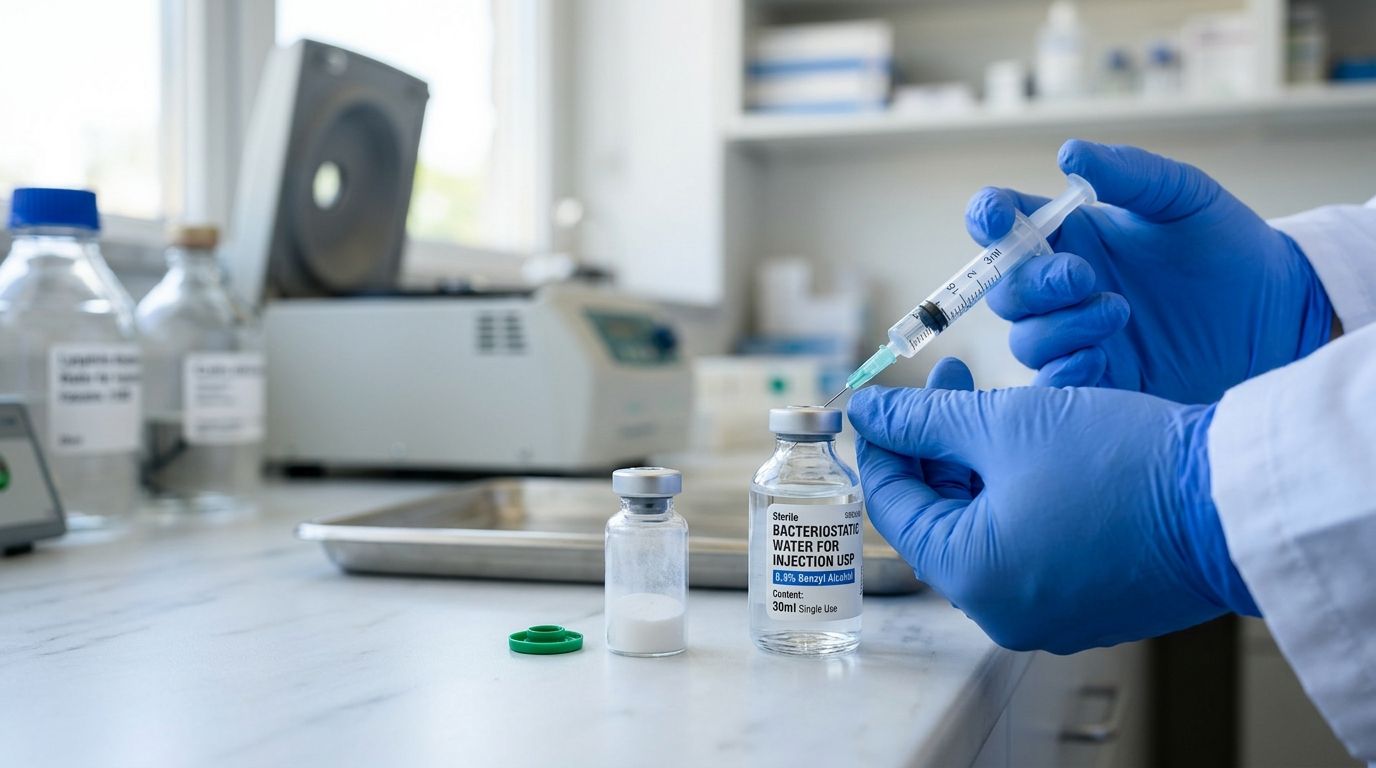
- USP bacteriostatic water with 0.9% benzyl alcohol is the best bacteriostatic water for peptide reconstitution for multi-dose vials used over several weeks in 2026.
- Preservative-free sterile water for injection is the correct choice for benzyl-alcohol-sensitive short-chain peptides and single-use assays.
- Bacteriostatic saline adds isotonicity but introduces sodium chloride that some binding assays won't tolerate.
- Lab-prepared 0.2 micron filtered water cuts cost at volume but only works with a validated filtration SOP on file.
- Single-use sterile ampoules eliminate in-use shelf-life tracking for low-frequency reconstitution needs.
Why this matters
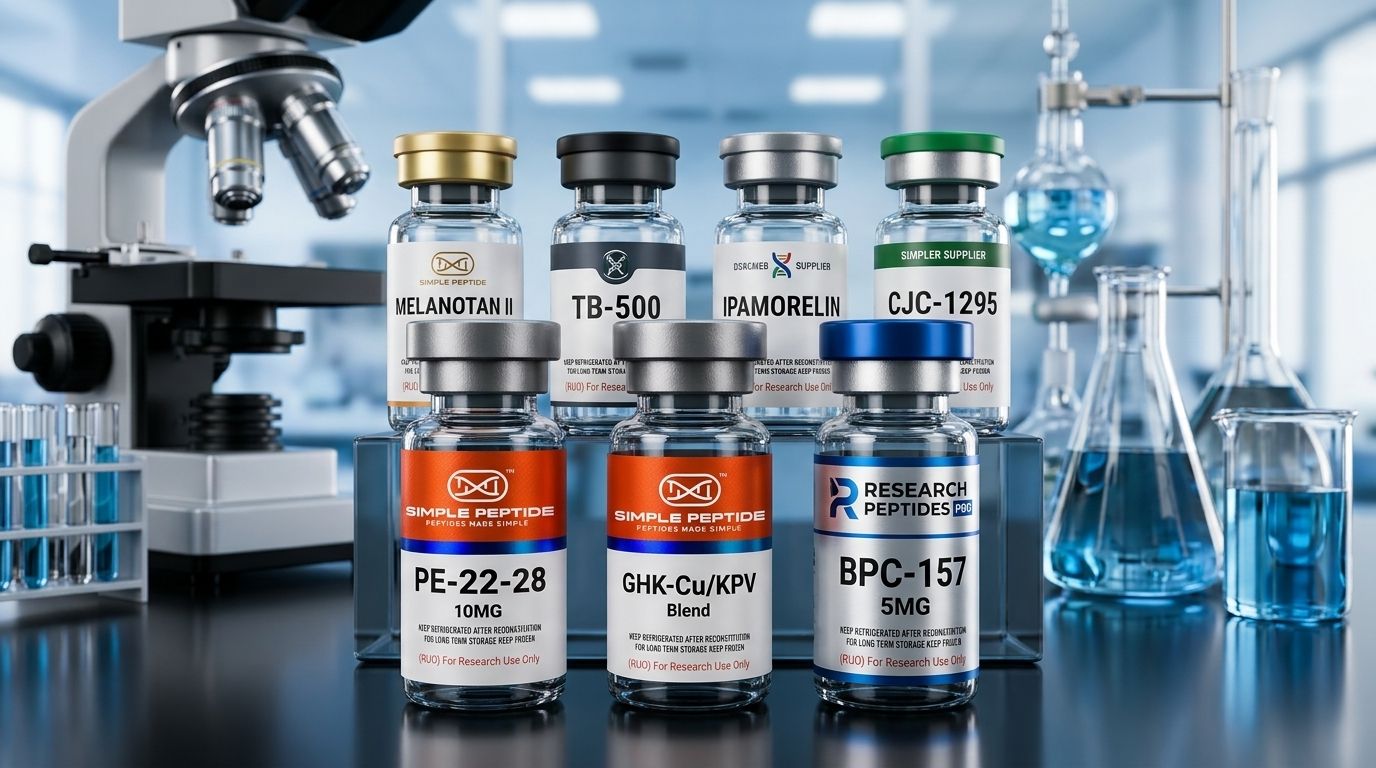
A reconstituted peptide is only as reliable as the diluent that touched it. Simple Life Science ships lyophilized research peptides that arrive with defined specifications and lot documentation — but that documentation stops being meaningful the moment a researcher reconstitutes with an undocumented water source.
Benzyl alcohol, the preservative in standard bacteriostatic water, is not neutral. Some short-chain peptides and certain binding assays react to it. Choosing the right diluent category — not just any bottle labeled "bacteriostatic" — is part of running a defensible protocol in 2026.
What makes the best bacteriostatic water for peptide reconstitution
- Sterility assurance — 0.2 micron filtration and USP-compliant manufacturing, not just "sterile" on the label
- Preservative type and concentration — 0.9% benzyl alcohol versus no preservative at all
- Documentation — Certificate of Analysis, lot traceability, and a stated USP monograph reference
- Peptide compatibility — whether the target peptide tolerates benzyl alcohol in prolonged contact
- Packaging format — multi-dose vial, single-use ampoule, or bulk in-house prep
- Storage stability — defined in-use shelf life once the container is opened
Bacteriostatic water options at a glance
| Option | Best for | Standout feature | Key limitation |
|---|---|---|---|
| USP Bacteriostatic Water (0.9% benzyl alcohol) | Multi-dose reconstitution over weeks | 28-day in-use window | Benzyl alcohol unsuitable for some short peptides |
| Sterile Water for Injection, USP (preservative-free) | Benzyl-alcohol-sensitive peptides | No preservative interference | Must be used same-session, no in-use shelf life |
| Bacteriostatic Saline, USP (0.9% NaCl + benzyl alcohol) | Isotonic reconstitution for cell-based work | Matches physiological osmolarity | Sodium chloride can interfere with some binding assays |
| Lab-prepared 0.2 micron filtered water | High-volume institutional labs | Lowest cost per reconstitution event | Requires a validated in-house filtration SOP |
| Single-use sterile water ampoules | Low-frequency, one-off reconstitution | No in-use tracking needed | Impractical for daily or weekly dosing schedules |
1. USP Bacteriostatic Water: best for multi-dose vials used over weeks
Bacteriostatic Water for Injection, USP, contains 0.9% benzyl alcohol as a preservative, which is what makes it safe for repeated withdrawal from the same vial across a 28-day in-use period. This is the default diluent for most peptide reconstitution protocols in research settings in 2026 because it tolerates repeated puncture without a documented sterility failure rate.
USP Bacteriostatic Water pros:
- 28-day in-use window reduces waste on multi-dose research protocols
- USP monograph compliance simplifies documentation for institutional review
- Widely available with a Certificate of Analysis from pharmaceutical suppliers
USP Bacteriostatic Water cons:
- Benzyl alcohol can affect stability of certain short-chain peptides on prolonged contact
- Not appropriate for benzyl-alcohol-sensitive assay chemistries
Best for: labs reconstituting the same peptide vial repeatedly over several weeks.
Verdict: Buy.
2. Sterile Water for Injection, USP: best for benzyl-alcohol-sensitive peptides
Sterile Water for Injection, USP, carries no preservative, which makes it the correct diluent when the target peptide or downstream assay can't tolerate benzyl alcohol. The tradeoff is that once opened, it doesn't carry the same in-use window as the bacteriostatic version — it's a single-session diluent.
Sterile Water for Injection pros:
- Zero preservative interference with sensitive peptide chemistry or assays
- USP-grade sterility documentation available from pharmaceutical distributors
Sterile Water for Injection cons:
- No extended in-use shelf life once the vial is opened
- Generates more waste for labs running frequent reconstitution cycles
Best for: short-chain peptides or assays where benzyl alcohol is a documented confound.
Verdict: Buy.
3. Bacteriostatic Saline, USP: best for isotonic reconstitution needs
Bacteriostatic Saline combines 0.9% sodium chloride with 0.9% benzyl alcohol, giving you an isotonic diluent with the same multi-dose shelf life as standard bacteriostatic water. It's the right call when downstream cell-based work needs a physiologically matched osmolarity, but the added sodium chloride is a variable some binding assays won't accept.
Bacteriostatic Saline pros:
- Matches physiological osmolarity for cell-based downstream work
- Same 28-day in-use window as standard bacteriostatic water
Bacteriostatic Saline cons:
- Sodium chloride can interfere with certain binding or aggregation assays
- Still carries benzyl alcohol, so it inherits the same sensitivity limitations
Best for: protocols where isotonicity matters more than preservative-free chemistry.
Verdict: Hold — confirm your assay tolerates both benzyl alcohol and added NaCl before adopting it as a default.
4. Lab-prepared 0.2 micron filtered water: best for high-volume institutional labs
Some institutional labs filter their own water in-house through a 0.2 micron sterile filter rather than purchasing pharmaceutical-grade diluent for every reconstitution event. This can lower the per-event cost meaningfully at volume, but it shifts the sterility burden onto the lab's own SOP and validation record.
Lab-prepared filtered water pros:
- Lowest per-reconstitution cost at institutional volume
- Full control over preservative inclusion or omission
Lab-prepared filtered water cons:
- Requires a documented, validated filtration procedure to hold up under review
- No external Certificate of Analysis to point to if sterility is questioned
Best for: labs with an existing validated filtration SOP and high reconstitution volume.
Verdict: Hold — only for labs that already have the validation paperwork in place.
5. Single-use sterile water ampoules: best for one-off reconstitution
Single-use ampoules solve a narrower problem: reconstituting a peptide once, without tracking an in-use shelf life for a partially used multi-dose vial. There's no preservative, no 28-day clock, and no leftover volume sitting in a fridge past its documented window.
Single-use ampoule pros:
- No in-use shelf-life tracking required
- No preservative to account for in downstream chemistry
Single-use ampoule cons:
- Impractical for daily or weekly dosing schedules — cost per event climbs fast
- Small fixed volume limits flexibility for larger reconstitution batches
Best for: occasional, low-frequency reconstitution where a multi-dose vial would go unused before expiring.
Verdict: Hold — right for infrequent use, wrong for anything approaching a weekly protocol.
How this list was ranked
Each option was scored against the six criteria above — sterility assurance, preservative concentration, documentation, peptide compatibility, packaging format, and storage stability — and ranked by which use case it serves without compromise, not by which one is "best" in the abstract. That's why five options make the list instead of one winner: the right diluent depends on the peptide and the protocol, not on brand loyalty.
Which bacteriostatic water should you choose?
For most multi-dose research peptide reconstitution in 2026, USP Bacteriostatic Water with 0.9% benzyl alcohol is the default choice — it's documented, widely available, and holds up for 28 days after first puncture. Switch to preservative-free Sterile Water for Injection the moment your peptide or assay flags benzyl-alcohol sensitivity. Everything else on this list is a situational swap, not a replacement for that default.
Need documented peptide sourcing?
Review lot documentation and specifications before you reconstitute.
FAQ
What's the best bacteriostatic water for peptide reconstitution in 2026?
USP Bacteriostatic Water containing 0.9% benzyl alcohol is the best default for multi-dose reconstitution in 2026 because it carries a documented 28-day in-use window. Switch to preservative-free sterile water only when the peptide or assay is benzyl-alcohol sensitive.
Is bacteriostatic water the same as sterile water for injection?
No. Bacteriostatic water contains 0.9% benzyl alcohol as a preservative, while sterile water for injection contains none. Bacteriostatic water supports repeated vial puncture over 28 days; sterile water is a single-session diluent.
How much benzyl alcohol is in bacteriostatic water?
USP bacteriostatic water contains 0.9% benzyl alcohol by standard. That concentration is what allows the diluent to be withdrawn from the same vial repeatedly without a documented sterility failure.
Can bacteriostatic water be used for research peptides sensitive to benzyl alcohol?
Not reliably. Benzyl-alcohol-sensitive peptides should be reconstituted with preservative-free Sterile Water for Injection instead, since prolonged contact with benzyl alcohol can affect stability.
How long does bacteriostatic water stay usable after the vial is opened?
Bacteriostatic water is typically documented for a 28-day in-use period after first puncture. Preservative-free sterile water carries no such extended window and should be treated as single-session.
Does bacteriostatic saline work for peptide reconstitution?
Bacteriostatic Saline, USP, works when isotonic reconstitution matters for downstream cell-based work, but the added 0.9% sodium chloride can interfere with certain binding assays. Confirm assay compatibility before adopting it.
What documentation should accompany bacteriostatic water for lab use?
Look for a Certificate of Analysis, lot traceability, and a stated USP monograph reference. Without those, sterility and preservative concentration can't be verified for a research record.
Can labs filter their own bacteriostatic water in-house?
Yes, using a 0.2 micron sterile filter, but only with a validated filtration SOP on file. Without that documentation, in-house prepared water has no external Certificate of Analysis to support it under review.
One last thing
The detail most researchers skip: benzyl alcohol tolerance isn't fixed per peptide class — it depends on concentration and contact time, which is exactly why the same peptide can behave differently across two labs using two different diluents. Document which water source touched which lot, every time, or the reconstitution step becomes the weakest link in an otherwise defined protocol.