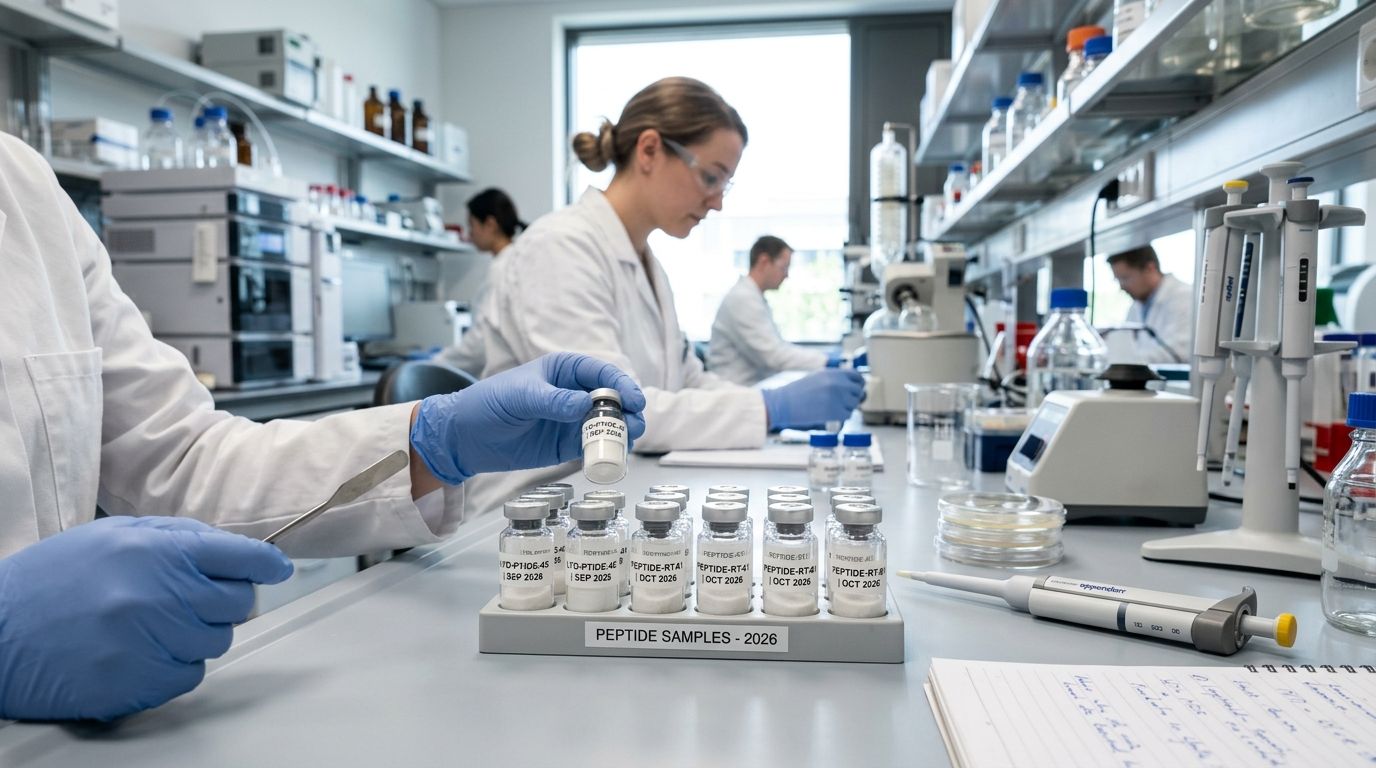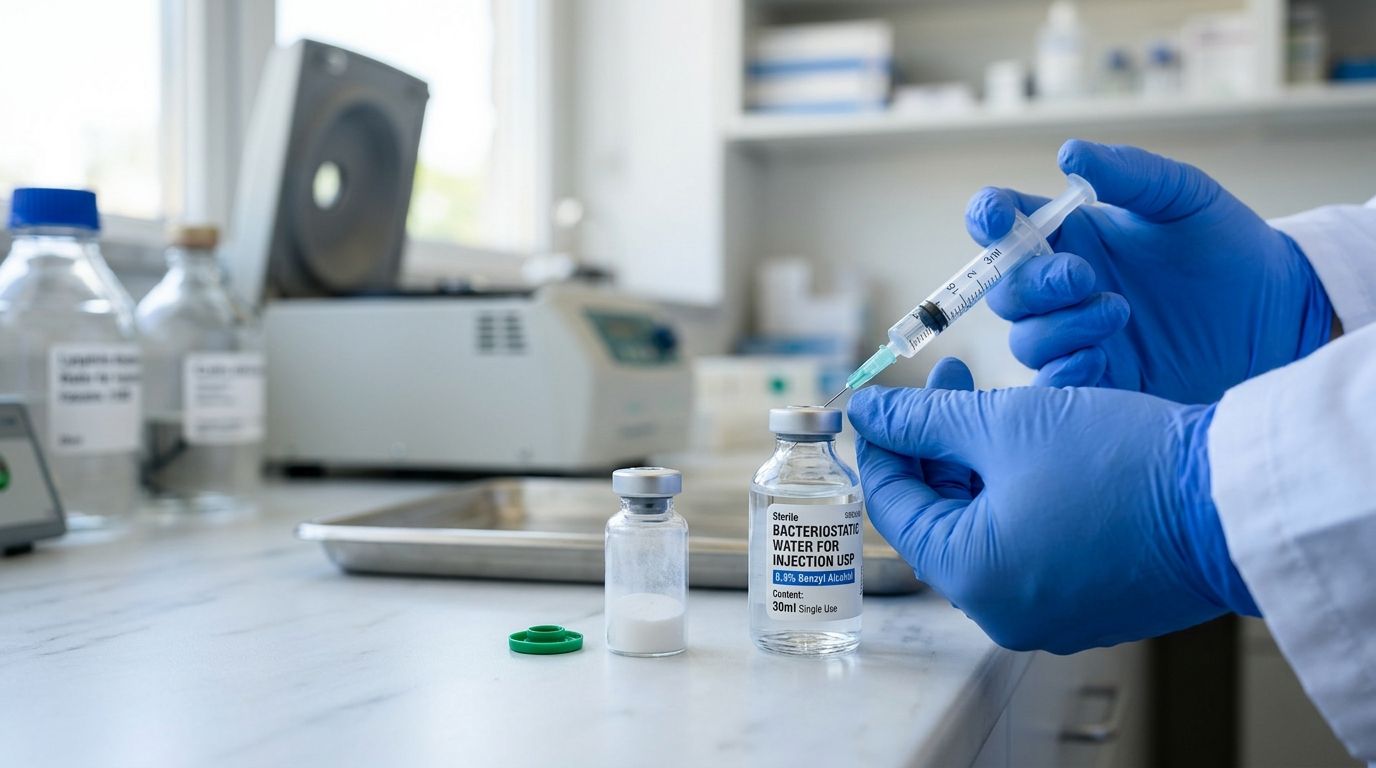
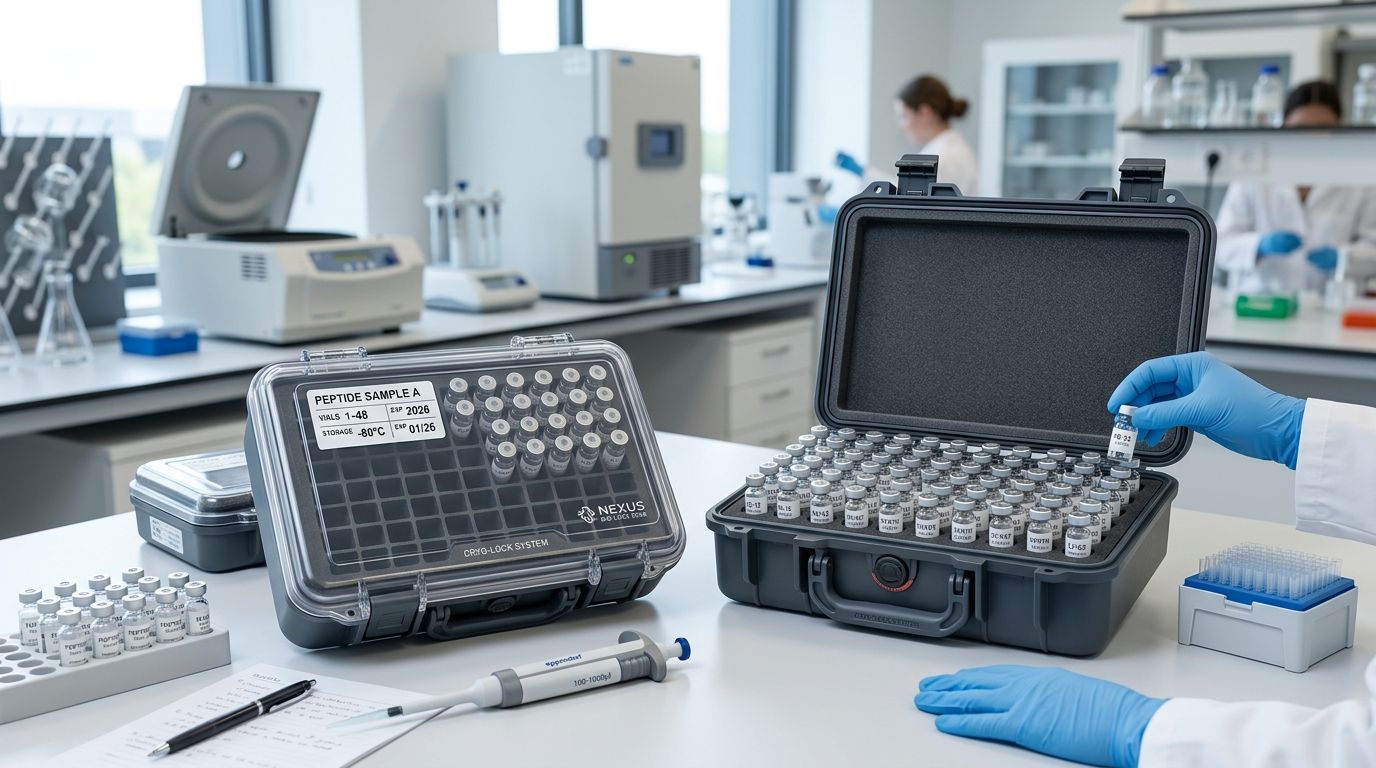
Choosing the right peptide storage case for laboratory use in 2026 comes down to matching temperature, moisture, and light control to how the peptide moves through your workflow — bulk backstock, active bench use, or long-term reference retention each need a different setup.
- The -20°C manual-defrost freezer is the best overall peptide storage case for laboratory use in 2026 for bulk lyophilized backstock.
- -80°C ultra-low freezers are best for long-term reference standards tied to lot documentation.
- A lockable desiccator cabinet with silica gel is the lowest-overhead option for bench-side lyophilized vial storage.
- Insulated cold-chain shipping cases protect peptide shipments in transit, not ongoing lab storage.
- Amber glass vial racks with light-blocking cases matter most for photosensitive sequences.
Why this matters
Lyophilized peptides are generally stable when kept dry, dark, and cold — but "generally stable" is not a spec, and a lab that can't document storage conditions can't defend analytical results. Reconstituted peptide solutions degrade faster than the lyophilized powder and are far more sensitive to freeze-thaw cycling, moisture ingress, and light exposure.
The storage case is part of the chain of custody for a research sample. If a peptide's provenance includes a certificate of analysis, the storage record downstream needs to hold up the same way. Simple Life Science ships lyophilized research peptides with defined specifications, and what happens to that vial after it arrives determines whether the analytical data on the label still means anything three months later.
What makes the best peptide storage case
- Temperature stability — tight control band with minimal cycling on defrost or door-open events
- Moisture control — desiccant load or sealed environment that keeps lyophilized powder dry
- Light protection — opaque or amber housing for photosensitive sequences
- Access traceability — logging of door opens, temperature excursions, or chain-of-custody events
- Capacity and organization — rack or tray systems that keep lot numbers legible and separated
- Power redundancy — battery backup or alarm systems for freezers holding irreplaceable reference standards
Peptide storage cases at a glance
| Storage type | Best for | Standout feature | Key limitation |
|---|---|---|---|
| -20°C manual-defrost freezer | Bulk lyophilized backstock | Stable low-temp band without cycling | No native excursion logging on most units |
| -80°C ultra-low freezer | Long-term reference standards | Minimal degradation over years of storage | Higher power draw and larger footprint |
| Lockable desiccator cabinet | Bench-side active-use vials | Low-cost moisture control at room temp | No cold-chain protection |
| Insulated cold-chain shipping case | Inbound and outbound transport | Holds temperature for hours without power | Not a storage solution once opened |
| Cryogenic dewar (vapor-phase LN2) | Ultra-long-term retention samples | Effectively halts chemical activity | Requires liquid nitrogen resupply and training |
| Amber vial rack with light-blocking case | Photosensitive peptide sequences | Blocks UV and visible light at the vial level | Doesn't address temperature or humidity alone |
1. -20°C manual-defrost freezer: best peptide storage case for bulk lyophilized backstock
A standard manual-defrost lab freezer set to -20°C is the default home for lyophilized peptide inventory that isn't in active use. Manual-defrost units avoid the temperature swings that frost-free freezers introduce during their automatic defrost cycles, which matters when a vial's stability window depends on staying cold and dry.
-20°C manual-defrost freezer pros:
- No auto-defrost temperature spikes
- Lower cost and power draw than ultra-low units
- Widely available with standard lab footprints
-20°C manual-defrost freezer cons:
- No built-in excursion logging on most base models
- Manual defrost means scheduled downtime for maintenance
Best for: general lyophilized peptide backstock awaiting reconstitution or shipment. Verdict: Buy.
2. -80°C ultra-low freezer: best for long-term reference standards
When a peptide lot serves as a reference standard tied to ongoing analytical review, -80°C storage extends the practical retention window well beyond what -20°C offers. This is the tier institutional labs reach for when a standard needs to remain chemically unchanged across multiple studies spanning years, not weeks.
-80°C ultra-low freezer pros:
- Slows degradation pathways more effectively than -20°C
- Standard for institutional reference material retention
- Often paired with alarm systems as a factory option
-80°C ultra-low freezer cons:
- Significant power draw and heat output
- Larger capital and floor-space commitment
Best for: reference standards and retain samples tied to lot documentation over multi-year timelines. Verdict: Buy for institutional buyers; Hold for single-project labs without a multi-year retention need.
3. Lockable desiccator cabinet: best for bench-side active-use storage
Vials pulled for near-term use don't belong in a -20°C freezer if they're going to be opened and closed repeatedly during a work session. A lockable desiccator cabinet with color-indicating silica gel keeps lyophilized powder dry at room or refrigerated temperature without the freeze-thaw exposure a freezer door introduces.
Lockable desiccator cabinet pros:
- Lowest overhead of any option on this list
- Silica gel color-change gives a visual moisture check
- Locking mechanism supports basic access control
Lockable desiccator cabinet cons:
- No temperature control — unsuitable as primary long-term storage
- Silica gel needs regular regeneration or replacement
Best for: vials in active use during a single work session or short protocol. Verdict: Buy as a supplement to cold storage, never as a replacement.
4. Insulated cold-chain shipping case: best for transport, not storage
This category solves a different problem than the first three: keeping a peptide cold between the point of shipment and the point where it reaches a proper freezer or desiccator. Gel-pack insulated cases hold a stable temperature band for hours, which covers most domestic transit windows but was never designed as an ongoing storage solution.
Insulated cold-chain shipping case pros:
- Protects temperature-sensitive peptides during transit
- No power source required
- Reusable across multiple shipments
Insulated cold-chain shipping case cons:
- Temperature hold is time-limited, not indefinite
- Offers no light or humidity control once opened
Best for: receiving or shipping peptide orders, not sitting on a bench or in a cabinet. Verdict: Buy for shipping logistics; Skip for anything past the receiving dock.
5. Cryogenic dewar (vapor-phase LN2): best for ultra-long-term retention
For samples that need to remain chemically static across the longest timeframes a lab tracks, vapor-phase liquid nitrogen storage goes further than any mechanical freezer. This tier is overkill for routine peptide inventory but earns its place for archival retain samples tied to regulatory or institutional documentation requirements.
Cryogenic dewar pros:
- Halts chemical activity more completely than -80°C
- No electrical dependency once charged
- Standard practice for archival biological and chemical retains
Cryogenic dewar cons:
- Requires liquid nitrogen resupply and handling training
- Not practical for frequently accessed inventory
Best for: archival retain samples with multi-year or indefinite retention requirements. Verdict: Hold — deploy only when the retention timeline actually demands it.
6. Amber vial rack with light-blocking case: best for photosensitive sequences
Some peptide sequences degrade faster under light exposure regardless of temperature. An amber glass vial rack housed in an opaque case addresses that variable directly, and it's a cheap addition to whichever cold-storage tier a lab already runs.
Amber vial rack pros:
- Blocks UV and visible light at the vial level
- Low cost relative to freezer or dewar tiers
- Combines easily with -20°C or -80°C storage
Amber vial rack cons:
- Does nothing for temperature or humidity control on its own
- Adds a step to inventory handling
Best for: any lyophilized or reconstituted peptide known to be light-sensitive. Verdict: Buy as a supplement, not a standalone storage strategy.
“If a peptide vial's label can't tell you what temperature it saw, the storage case failed its job.”
How we ranked
Each entry was scored against the six criteria above — temperature stability, moisture control, light protection, access traceability, capacity, and power redundancy — and assigned to the use case where it performs best rather than forced into a single overall leaderboard. That's why a shipping case and a cryogenic dewar can both appear without competing for the same slot.
Get peptides with defined specifications
Review lot documentation before you decide how to store it.
Which peptide storage case should you choose?
For most laboratory research operations in 2026, a -20°C manual-defrost freezer covers the bulk of lyophilized peptide inventory, with a lockable desiccator cabinet handling anything pulled for active bench work. Add an -80°C ultra-low freezer only when a reference standard needs multi-year retention, and treat cold-chain shipping cases and cryogenic dewars as specialized tools for transport and archival retains, not everyday storage.
FAQ
What is the best peptide storage case for laboratory use in 2026?
A -20°C manual-defrost freezer is the best overall option for lyophilized peptide backstock in 2026 because it avoids the temperature cycling of frost-free units. Bench-side active-use vials are better suited to a lockable desiccator cabinet instead.
Is -80°C storage necessary for research peptides?
Not for routine inventory, but -80°C ultra-low freezers extend retention windows for reference standards tied to long-term analytical documentation. Single-project labs without a multi-year retention need can rely on -20°C storage.
How should reconstituted peptides be stored differently from lyophilized powder?
Reconstituted peptide solutions degrade faster and are more sensitive to freeze-thaw cycling than lyophilized powder. They generally require colder, more consistent storage and shorter handling windows once in solution.
Do peptide storage cases need light protection?
Yes, for sequences known to be photosensitive — an amber vial rack or opaque case blocks UV and visible light at the vial level. Light protection addresses a different degradation pathway than temperature or moisture control.
Can an insulated shipping case be used for long-term storage?
No, insulated cold-chain shipping cases hold temperature for hours during transit, not indefinitely. Once a shipment arrives, the peptide should move into a proper freezer or desiccator.
What does a desiccator cabinet actually protect against?
A lockable desiccator cabinet with silica gel protects lyophilized powder from moisture at room or refrigerated temperature. It does not provide cold storage, so it should supplement a freezer rather than replace one.
How do labs track chain of custody for peptide storage?
Access traceability features like door-open logging or excursion alarms tie storage conditions back to lot documentation. This matters most for reference standards where analytical results depend on unchanged storage history.
When is cryogenic (liquid nitrogen) storage worth the added handling?
Vapor-phase liquid nitrogen storage is worth the resupply and training overhead only for archival retain samples with multi-year or indefinite retention requirements. For routine inventory, -80°C ultra-low freezers are sufficient.
One last thing
The most common failure point in 2026 isn't the freezer or the cabinet — it's the gap between them. A vial that spends ten minutes on an open bench between the shipping case and the freezer during receiving accumulates more uncontrolled exposure than most labs account for in their storage logs.